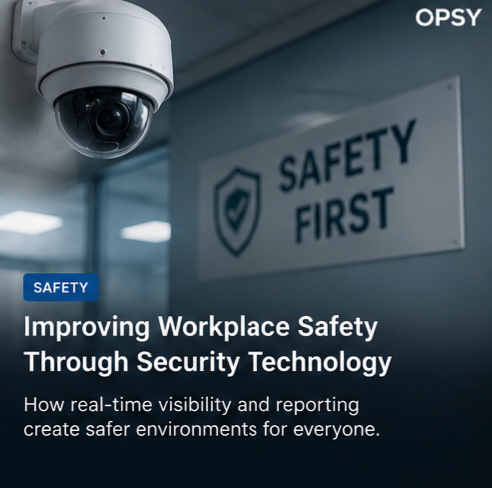
Workplace safety has become a top priority for organizations across every industry. Whether managing office buildings, manufacturing facilities, healthcare institutions, warehouses, educational campuses, or residential communities, businesses are expected to provide a safe environment for employees, visitors, contractors, and customers.
As workplaces become more complex, traditional security methods are no longer sufficient. Manual patrol logs, paper reports, and delayed communication make it difficult to identify risks and respond quickly when incidents occur. Modern security technology enables organizations to take a proactive approach to workplace safety by providing real-time visibility, faster communication, and data-driven decision-making.
Investing in digital security solutions not only helps prevent incidents but also strengthens regulatory compliance, protects company assets, and improves employee confidence.
Why Workplace Safety Matters
A strong workplace safety strategy benefits every part of an organization. Beyond preventing accidents and security incidents, it helps businesses reduce financial losses, improve operational efficiency, and strengthen their reputation.
Organizations that prioritize workplace safety can:
- Reduce workplace accidents and security incidents
- Protect employees, visitors, and contractors
- Safeguard physical assets and facilities
- Improve regulatory compliance
- Minimize operational disruptions
- Increase employee confidence and morale
- Strengthen client trust and business relationships
Creating a safe workplace is no longer just a legal requirement—it has become an important competitive advantage.
Technology-Driven Safety Solutions
Modern security management platforms provide organizations with powerful tools to identify risks before they become serious problems. Instead of reacting after an incident occurs, businesses can continuously monitor operations and respond in real time.
1. Real-Time Incident Reporting
When hazards or security incidents occur, immediate reporting is essential. Mobile security applications allow guards to document incidents directly from the field using their smartphones or tablets.
Incident reports can include:
- Date and time
- GPS location
- Photos and videos
- Detailed descriptions
- Witness information
- Corrective actions
- Follow-up notes
Instant reporting ensures that supervisors receive accurate information immediately, enabling faster decision-making and more effective incident management.
2. Faster Response Times
Every second matters during an emergency. Modern security platforms automatically notify supervisors when incidents, alarms, or unusual events occur.
Real-time alerts enable managers to:
- Dispatch additional personnel
- Contact emergency services
- Coordinate response teams
- Keep stakeholders informed
- Reduce the impact of security incidents
Faster communication often results in faster resolution, helping minimize risks and protect both people and property.
3. Patrol Verification and Risk Prevention
Routine patrols remain one of the most effective ways to identify hazards before they escalate. Using GPS tracking, QR checkpoints, NFC scanning, and geofencing, organizations can verify that patrols are completed correctly and on schedule.
Regular patrol verification helps identify:
- Unlocked doors
- Equipment failures
- Fire hazards
- Unauthorized access
- Damaged infrastructure
- Suspicious activity
- Safety violations
By detecting these issues early, organizations can take corrective action before they develop into costly incidents.
4. Data Analysis for Continuous Improvement
Historical security data provides valuable insights that help organizations improve workplace safety over time.
Managers can analyze trends such as:
- Incident frequency
- High-risk locations
- Peak incident hours
- Patrol completion rates
- Response times
- Recurring safety issues
- Workforce performance
These insights support better planning, smarter resource allocation, and more effective risk prevention strategies.
Building a Safer Workplace Culture
Technology alone cannot create a safe workplace—it must be supported by well-trained security personnel, clear operational procedures, and a culture of accountability. Organizations that combine modern technology with ongoing employee training and proactive risk management create safer environments for everyone.
A digital-first approach also improves transparency by providing accurate audit trails, standardized reporting, and measurable operational KPIs. This not only simplifies compliance but also demonstrates a strong commitment to safety for clients, employees, and regulatory authorities.
How OPSY Helps
OPSY is designed to help organizations build safer workplaces through intelligent security management technology. The platform combines mobile workforce management, GPS patrol verification, digital incident reporting, real-time alerts, operational dashboards, and automated reporting into one centralized solution.
With OPSY, security teams can:
- Monitor guard activity in real time
- Verify patrol completion using GPS and checkpoint technology
- Submit detailed incident reports with photos and location data
- Receive instant notifications about critical events
- Track operational KPIs and workforce performance
- Generate professional compliance reports in PDF and Excel formats
- Maintain complete audit logs for every security operation
By replacing outdated paper-based processes with digital workflows, OPSY helps organizations reduce operational risks, improve response times, strengthen compliance, and create safer environments for employees, visitors, and clients.
The Future of Workplace Safety
As organizations continue to embrace digital transformation, security technology will play an even greater role in protecting people and property. Artificial intelligence, predictive analytics, mobile workforce management, offline capabilities, and real-time operational intelligence are becoming essential tools for modern security teams.
Companies that invest in these technologies today are better equipped to reduce risk, improve operational efficiency, and foster a workplace culture where safety is not just a policy—but a daily practice. With solutions like OPSY, organizations can move beyond reactive security and build a smarter, more proactive approach to workplace safety.