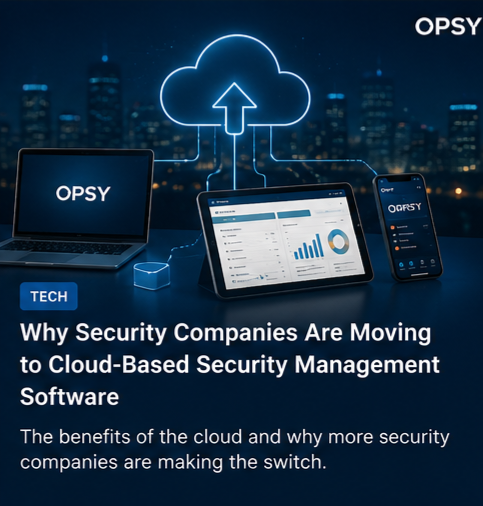
The security industry has experienced significant digital transformation over the past decade. As client expectations continue to grow and operations become more complex, security companies are moving away from spreadsheets, paper reports, and on-premise systems in favor of cloud-based security management software.
Cloud technology has become the foundation of modern security operations, enabling organizations to manage guards, patrols, incident reporting, scheduling, and client communication from a single centralized platform. For security providers looking to improve efficiency, scalability, and service quality, cloud-based solutions are no longer a luxury—they are a necessity.
The Limitations of Traditional Security Management
Many security companies still rely on outdated processes that slow operations and increase administrative workload. Paper patrol logs, handwritten incident reports, disconnected spreadsheets, and manual scheduling create unnecessary complexity and make it difficult to maintain operational visibility.
These traditional methods often lead to:
- Incomplete or inaccurate documentation
- Communication delays between guards and supervisors
- Limited visibility into field operations
- Time-consuming report generation
- Difficulty preparing for audits and compliance reviews
- Increased risk of human error
- Higher operational costs
As security operations expand across multiple sites and teams, these inefficiencies become even more difficult to manage.
The Benefits of Cloud-Based Security Management
Cloud-based platforms provide a centralized environment where every aspect of a security operation can be managed in real time. Because information is securely stored in the cloud, authorized users can access operational data from anywhere using a computer, tablet, or smartphone.
Access Information Anytime, Anywhere
Whether managing one location or hundreds of sites, supervisors can monitor operations remotely without being tied to a physical office.
Cloud platforms provide instant access to:
- Guard schedules
- Active shifts
- Patrol progress
- Incident reports
- Client information
- Operational dashboards
- Workforce performance metrics
This flexibility enables managers to make informed decisions wherever they are.
Real-Time Operational Visibility
One of the greatest advantages of cloud software is real-time visibility. Managers no longer need to wait until the end of a shift to understand what is happening in the field.
Live dashboards provide immediate insights into:
- Active guards
- GPS locations
- Patrol completion
- Missed checkpoints
- Incident activity
- Shift status
- Emergency alerts
This transparency improves accountability while enabling faster responses to operational issues.
Improved Collaboration
Cloud platforms connect guards, supervisors, dispatchers, managers, and clients within a single ecosystem. Everyone has access to the most current information, reducing misunderstandings and eliminating duplicate work.
Real-time communication tools also help teams coordinate during emergencies, assign new tasks, and respond quickly to unexpected events.
Stronger Security and Compliance
Modern cloud providers invest heavily in cybersecurity, offering secure data storage, encrypted communication, automatic backups, and role-based access controls.
Cloud-based security management software also simplifies compliance by maintaining detailed audit logs, digital patrol records, GPS verification, and timestamped incident reports. This makes preparing for client audits and regulatory inspections significantly easier.
Scalability Without Complexity
As security companies grow, their software should grow with them. Cloud-based platforms allow organizations to add new guards, locations, clients, and operational features without investing in expensive infrastructure or complex server maintenance.
Whether supporting ten guards or several thousand, cloud solutions provide the flexibility needed to scale efficiently.
Why Clients Prefer Cloud-Enabled Security Providers
Today's clients expect transparency and immediate access to operational information. Cloud-based platforms allow security providers to deliver professional client portals, automated reports, and real-time updates that improve communication and strengthen trust.
Clients can quickly review patrol activity, incident reports, service performance, and compliance documentation without waiting for manual reports from the security company.
This level of visibility has become a key differentiator in today's competitive security market.
How OPSY Helps
OPSY is a cloud-native security management platform designed specifically for modern security companies. It combines workforce management, patrol tracking, scheduling, incident reporting, GPS verification, analytics, and client communication into one secure and intuitive solution.
With OPSY, organizations can:
- Manage guards and locations from a centralized dashboard
- Monitor patrols and workforce activity in real time
- Create digital incident reports with photos and GPS verification
- Automate scheduling and operational reporting
- Track performance KPIs and compliance metrics
- Generate professional PDF and Excel reports in seconds
- Provide branded client portals through White Label capabilities
- Support field teams with a powerful mobile application and offline mode
By eliminating manual processes and connecting every aspect of security operations through the cloud, OPSY helps organizations improve productivity, increase accountability, reduce operational costs, and deliver a superior client experience.
The Future Is Cloud-Based
Cloud technology is rapidly becoming the industry standard for security operations. As organizations continue to embrace digital transformation, cloud-based security management software will play a critical role in improving efficiency, enhancing compliance, and delivering greater operational transparency.
Security companies that adopt cloud solutions today are better positioned to scale their business, respond faster to client needs, and remain competitive in an increasingly technology-driven market. With platforms like OPSY, the future of security management is not only digital—it is connected, intelligent, and built for growth.