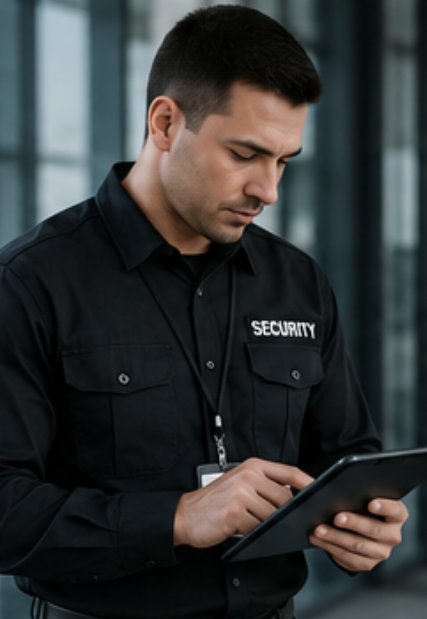
Why Guard Accountability Matters
Accountability is one of the foundations of professional security services. Every client expects security guards to arrive on time, complete scheduled patrols, respond appropriately to incidents, and document their work accurately. Without a reliable way to verify these activities, managers struggle to measure performance, clients lose confidence, and operational risks increase.
For many years, accountability relied on paper patrol logs, handwritten reports, and verbal updates. While these methods served their purpose, they offered limited visibility into daily operations and left room for errors, missing information, and inconsistent reporting.
Today's security companies operate in a very different environment. Clients expect transparency, immediate updates, and detailed reports that demonstrate the value of the services they receive. Managers need real-time visibility into workforce activity across multiple locations, while guards require tools that help them perform their responsibilities efficiently.
Improving accountability is not about creating a culture of surveillance or distrust. Instead, it is about building reliable systems that support employees, improve communication, and ensure every task is completed according to company standards.
What Accountability Really Means
Many people associate accountability with monitoring employees or identifying mistakes. In reality, accountability is much broader.
A truly accountable security operation ensures that every guard:
- Understands their responsibilities
- Knows what is expected during each shift
- Has access to the correct procedures
- Documents incidents accurately
- Completes patrols consistently
- Communicates effectively with supervisors
- Can demonstrate completed work through objective records
When expectations are clear and work is properly documented, accountability becomes a tool for continuous improvement rather than punishment.
Strong accountability also protects guards by providing evidence of completed duties and helping resolve disputes with clients or management.
Common Accountability Challenges
Security companies often face similar operational challenges regardless of their size.
Some of the most common issues include:
Paper-Based Documentation
Handwritten patrol logs can be incomplete, difficult to read, or misplaced entirely.
Missed Patrols
Without GPS verification or digital checkpoints, managers may not know whether scheduled patrols were completed.
Delayed Incident Reports
Reports submitted hours after an incident may contain missing or inaccurate information.
Limited Operational Visibility
Managers responsible for multiple locations often lack real-time insight into field operations.
Inconsistent Procedures
Different supervisors may follow different processes, leading to confusion and inconsistent service quality.
Recognizing these challenges is the first step toward building a more accountable workforce.
Establish Clear Expectations
Accountability starts long before a guard begins their shift.
Every employee should clearly understand:
- Assigned responsibilities
- Patrol schedules
- Checkpoint locations
- Emergency procedures
- Client requirements
- Reporting expectations
- Communication protocols
Detailed post orders and standard operating procedures (SOPs) provide consistency across all client sites and reduce misunderstandings.
When expectations are documented and easily accessible through a mobile application, guards spend less time searching for information and more time focusing on security.
Standardize Patrol Procedures
Every patrol should follow a consistent and repeatable process.
Organizations should establish standardized procedures for:
- Starting and ending shifts
- Beginning patrol rounds
- Visiting checkpoints
- Recording observations
- Reporting hazards
- Escalating incidents
- Completing patrol summaries
Consistency improves both operational quality and client confidence.
Digital workflows also simplify onboarding by ensuring every employee follows the same procedures regardless of location.
Use Technology to Verify Work
One of the biggest improvements modern technology brings to the security industry is objective verification.
Instead of relying on assumptions, managers can confirm completed work using:
- GPS location verification
- QR checkpoint scanning
- NFC checkpoints
- Timestamped patrol logs
- Digital shift check-ins
- Mobile incident reporting
- Photo documentation
These tools create an accurate audit trail that benefits both management and field personnel.
Guards no longer need to prove they completed their duties—digital records provide clear evidence automatically.
Improve Incident Reporting
Incident reports are one of the strongest indicators of accountability.
Every report should include:
- Date and time
- Exact location
- Incident description
- Photos or supporting evidence
- Actions taken
- Follow-up recommendations
Submitting reports immediately through a mobile application improves accuracy while reducing administrative work.
High-quality documentation also strengthens compliance, client communication, and legal protection.
Measure Performance with KPIs
Accountability becomes measurable when organizations define clear performance indicators.
Useful KPIs include:
- Patrol completion rate
- Checkpoint compliance
- On-time attendance
- Incident reporting quality
- Response times
- Shift completion
- GPS verification rate
- Client satisfaction
- Compliance score
- Training completion
Rather than focusing only on mistakes, these metrics help managers recognize high performers and identify coaching opportunities.
Create a Culture of Responsibility
Technology alone cannot create accountability.
Leadership plays an equally important role.
Successful organizations encourage accountability by:
- Providing constructive feedback
- Recognizing excellent performance
- Offering continuous training
- Encouraging open communication
- Setting realistic expectations
- Supporting employee development
When guards understand that accountability exists to improve operations rather than assign blame, they become more engaged and motivated.
Using Accountability to Improve Client Relationships
Clients increasingly expect transparency from their security providers.
Digital accountability allows organizations to demonstrate service quality through:
- Patrol verification
- Incident summaries
- Operational dashboards
- Automated reports
- Compliance documentation
- Historical activity logs
Providing objective evidence of completed work builds trust and strengthens long-term client relationships.
For many security companies, improved reporting becomes a key competitive advantage during contract renewals.
Common Mistakes to Avoid
Even organizations with modern systems can undermine accountability through poor management practices.
Common mistakes include:
- Relying entirely on manual paperwork
- Failing to define measurable expectations
- Ignoring positive performance
- Tracking too many KPIs
- Delaying incident documentation
- Providing inconsistent supervision
- Failing to update SOPs
- Treating accountability as punishment instead of improvement
Avoiding these issues helps create a healthier and more productive work environment.
How OPSY Improves Guard Accountability
OPSY provides security companies with the tools needed to create transparent, measurable, and consistent security operations.
Using OPSY, organizations can:
- Verify patrol completion using GPS and QR checkpoints
- Track guard activity in real time
- Manage shifts from a centralized platform
- Capture digital incident reports with photos and timestamps
- Monitor operational KPIs
- Maintain complete audit logs
- Generate automated PDF and Excel reports
- Improve communication between guards, supervisors, and clients
- Support compliance with accurate operational records
By replacing manual processes with digital workflows, OPSY helps organizations strengthen accountability while reducing administrative workload and improving overall service quality.
Conclusion
Guard accountability is far more than simply monitoring employee activity. It is the foundation of professional security operations, ensuring that responsibilities are clearly defined, work is consistently documented, and clients receive the reliable service they expect.
Organizations that combine strong leadership, standardized procedures, measurable KPIs, and modern technology create environments where guards can perform confidently and managers can make informed decisions based on real-time operational data.
Ultimately, accountability benefits everyone. Guards gain clear expectations and fair performance evaluations, managers gain visibility into daily operations, clients receive greater transparency, and security companies build stronger reputations in an increasingly competitive industry.
Frequently Asked Questions
What is guard accountability?
Guard accountability is the process of ensuring security personnel complete assigned duties, follow company procedures, document incidents accurately, and maintain consistent operational standards.
Why is accountability important in the security industry?
Strong accountability improves service quality, increases client confidence, supports compliance, reduces operational risks, and helps managers make data-driven decisions.
How can technology improve accountability?
Modern security management software provides GPS verification, digital patrol tracking, QR checkpoints, mobile incident reporting, audit logs, and real-time dashboards that automatically document daily activities.
Which KPIs should managers use to measure accountability?
Useful KPIs include patrol completion, attendance, checkpoint compliance, response time, incident reporting quality, training completion, and client satisfaction.
How does OPSY help improve guard accountability?
OPSY centralizes workforce management by combining scheduling, patrol verification, incident reporting, operational analytics, audit logs, and automated reporting into a single cloud-based platform.